

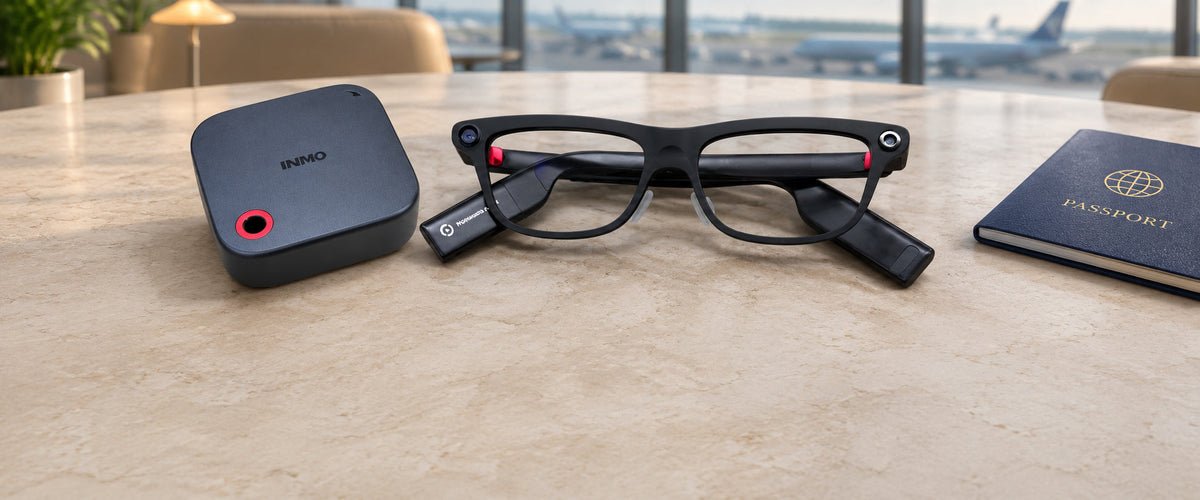
On a long travel day with frequent translation and few outlets, a spare battery beats a fixed one, and INMO GO3 includes two swappable batteries plus a portable charging case. The battery that comes off at a break goes into the case to recharge while the other one powers the glasses. A fixed battery stays a sensible option when its runtime suits your planned translation and you can charge it at set times, such as each evening.
Two details of your trip guide the choice: how much time you expect to spend using translation, and when you can realistically plug in. Consider the amount of translation separately from the length of the travel day. Several hours away from an outlet might involve occasional exchanges or extended subtitle use, and those are different demands on your travel kit.
Which Battery Design Suits a Long Travel Day?
Frequent translation and limited charging opportunities favor a charged spare you can fit when needed.
| Travel-day situation | GO3 swappable design | Fixed battery |
|---|---|---|
| Frequent translation through the day, few outlets | Fit a charged spare and recharge the removed battery in the case | Plan access to power to replenish the built-in battery |
| Extended time without an outlet | The GO3 case uses stored power to recharge a removed battery | Arrange a suitable charging source for the device |
| Occasional translation, charging available each evening | Recharge the spare during the evening | Schedule built-in battery charging during the evening |
| Preference for a simple daily routine | Carry the charged spare in the case and swap it in at a break | Charge the built-in battery at a set time each day |
| Translation use concentrated into longer periods | Prepare a charged spare before the period of frequent use | Match the device's runtime and charging schedule to the planned use |
When an outlet is free just before a long stretch of translation, use it to charge the case with the removed battery inside.
Mapping Translation Use Across a Travel Day
Translation on a travel day can involve both sustained listening and brief exchanges. Following a presentation in another language means reading live subtitles for an extended period, and real-time translation in INMEET covers 127 languages online, with the same live text shown on the lenses and on your phone. Shorter exchanges, where you listen and then reply, use two-way dialogue translation, which supports 78 languages on Android and 82 on iOS. In a dialogue, the other person's speech appears as translated text on the lenses, and your reply is translated and spoken aloud so the other person hears it in their language, through the phone speaker or the optional INMO Speaker, which connects to the phone separately from GO3. The spoken reply can use a male or a female voice, and you can choose whether your own words also appear on the lenses. During a dialogue, the GO key on the temple switches between directional and 360 pickup, and the lenses can show the translation alone or the original and translation together.
When the language around you changes from one stop to the next, INMEET can detect the listening language automatically while you are online, and the lenses can switch between the translation and the original wording when you want to check a place name.
Before you leave, look at the itinerary and pick the break that comes just ahead of the longest stretch of subtitle reading. Swapping there means that stretch starts on a freshly charged battery, and the battery that came out spends the session recharging in the case.
How GO3 Stores and Replenishes Power
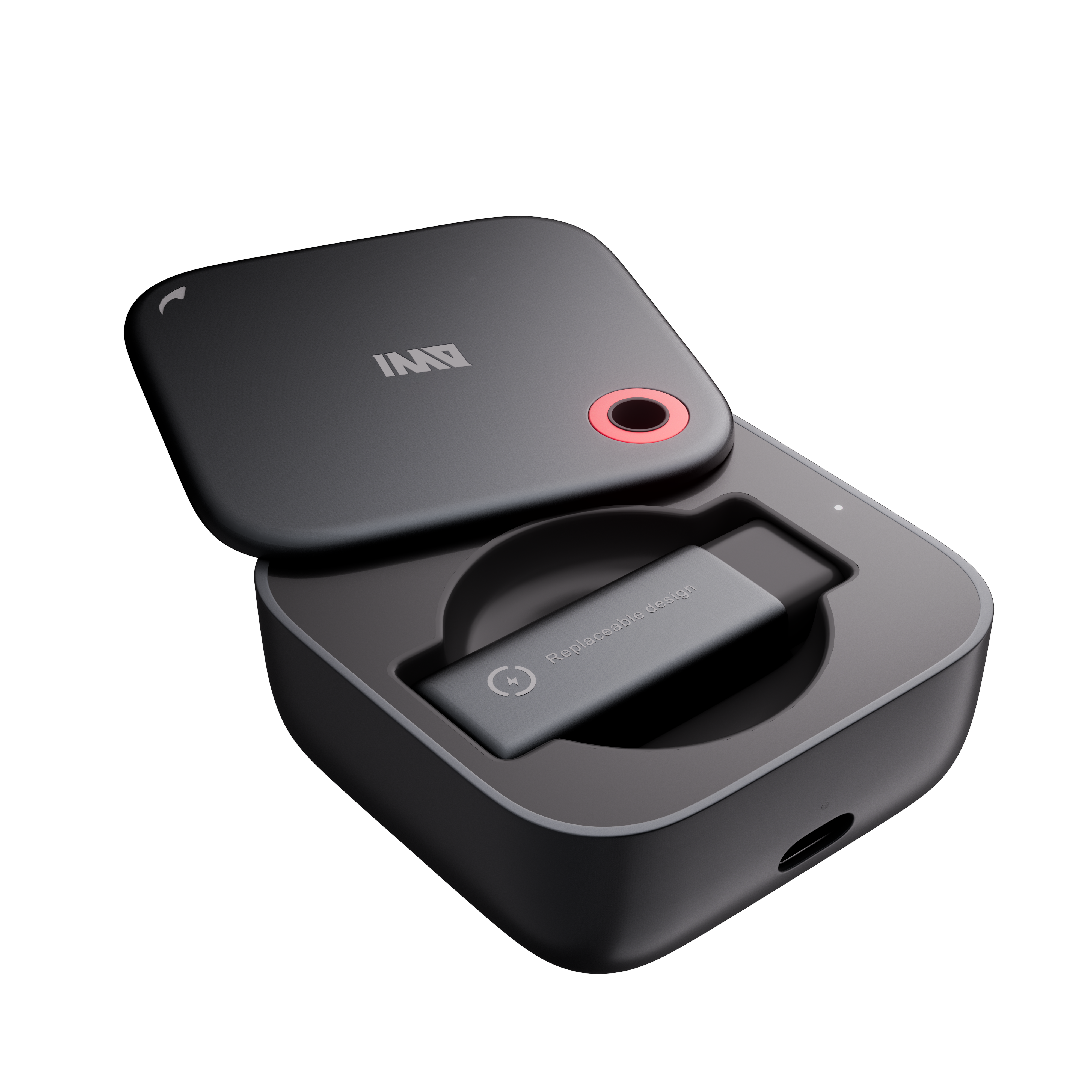
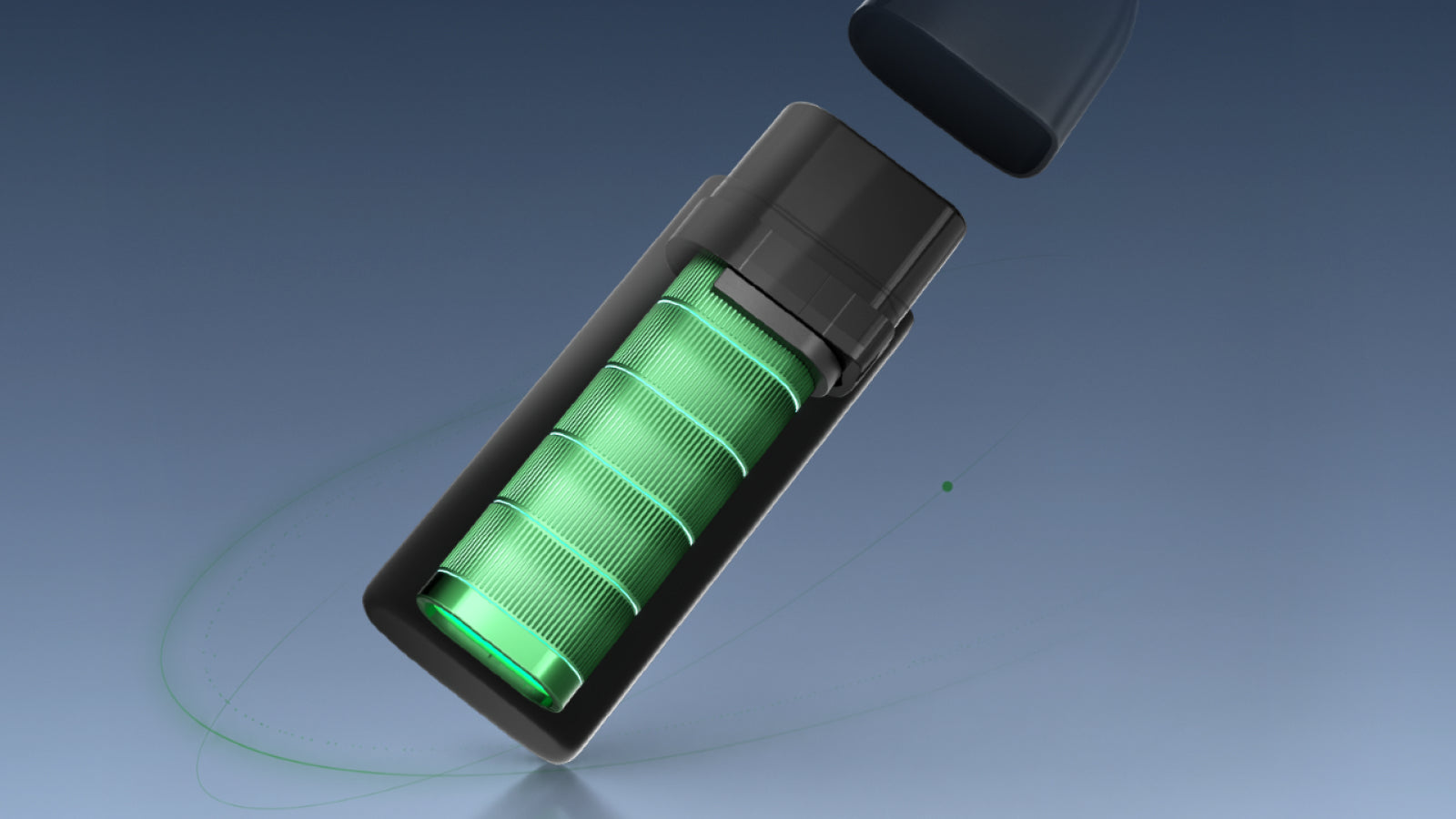
A swappable design separates the battery powering the glasses from the battery being recharged. Once a charged spare is fitted and GO3 is powered on, the removed battery can recharge in the case while you use the glasses.
Across the whole set, the batteries and the case add up to as much as 24 hours of total use. One battery runs the glasses while the other sits in the case, and a swap at a convenient stop brings the charged one back into use.
Stored power in the case covers roughly three to four full recharges of a battery. Before departure, recharge the case with the spare inside, and set off with a charged battery fitted in the left temple.
Swapping GO3 Batteries on the Move
A swap fits into any short break in the day, and the magnetic battery change itself takes about 5 seconds. Keeping the case in an outer pocket of the day bag puts it within reach at each stop. With the case in hand:
- Slide the battery off the back of the left temple.
- Set it in the charging case to recharge.
- Fit the charged spare in its place.
- Hold the power button down for about 3 seconds to turn GO3 back on.
Battery planning also belongs alongside the rest of your preparation for using translation glasses abroad. Before travel without internet access, download the offline language packs. Offline translation on GO3 handles 9 languages on Android and iOS alike while the glasses stay paired with your phone, and the guide to offline translation glasses covers that preparation in more detail.
Keeping the Spare Ready During Travel
The charged spare is easiest to reach when it has a fixed home. Keeping it in the charging case means it stays topped up and sits in one known pocket of your day bag, ready for the next break. A fixed-battery design may suit someone who prefers to charge a built-in battery at set times, provided its runtime fits the translation they have planned.
A short evening routine keeps the rotation simple. Put the battery you removed during the day into the case, recharge the case and your phone during the evening, and start the next morning with the fuller battery in the left temple. Choose a consistent place for the case in your travel bag, keeping it accessible when you prepare for the next battery change.
Frequently Asked Questions
Can a power bank replace a spare battery for translation glasses?
GO3 batteries are charged in the charging case, and the glasses run on whichever battery is fitted in the left temple. A spare battery and a power bank therefore play different roles: at a break, the charged spare goes straight into the left temple and the removed battery goes into the case. If you carry a power bank for your phone, keep it in the plan for the phone.
How should charging be planned around a layover?
Place the removed battery in the charging case and connect the case to power during the stop, along with your phone. Packing a USB-C cable with your charging equipment keeps the case ready to connect at the stop.
Is it worth buying an extra battery for a long trip?
Every GO3 bundle already comes with a spare: one battery sits in the glasses and the other is ready to swap in. Begin your packing plan with that included spare and its role in your charging routine before considering additional equipment for the trip.
Can GO3 reduce distractions during a translated conversation?
Two-way dialogue translation on GO3 lets you switch on Do Not Disturb while you translate. This option helps reduce interruptions during an extended exchange, so the lenses stay focused on the translated conversation. After the exchange, the translation history from dialogue translation can be viewed on your phone.
Share:
Teleprompter Glasses for Natural Eye Contact: Script Preparation and Practice
Translation Glasses in the EU with Replaceable Batteries and a Two-Year Warranty